
What to Wear for a Paris Photoshoot: A Complete Outfit Guide

Planning a photoshoot in Paris and wondering what to wear?
This is one of the questions I hear most often from couples and families before their session. And honestly, your outfit can make a huge difference in how your photographs look.
You don't need to buy a new wardrobe or dress like you're going to a fashion shoot. The goal is not to look overly styled or uncomfortable. The goal is to create a cohesive, elegant look that still feels like you — and that works beautifully with the architecture, streets and atmosphere of Paris.
After photographing many couples, families and solo travellers in Paris, I've learned that the best outfits usually have one thing in common: they work together without looking identical.
Here is my practical guide to choosing outfits for your Paris photoshoot.Think about the whole group, not just one outfit
1. Think about the whole group, not just one outfit
If you're having a photoshoot as a couple or family, don't choose everyone's outfit separately.
This is probably the most important rule.
Imagine your family standing together in front of the Eiffel Tower. One person is wearing beige, another bright red, another navy blue, someone has a large floral print, and someone else is wearing neon sneakers.
Each outfit might look perfectly fine on its own.
Together, however, they can make the photograph feel visually chaotic.
Instead, choose your outfits as one composition.
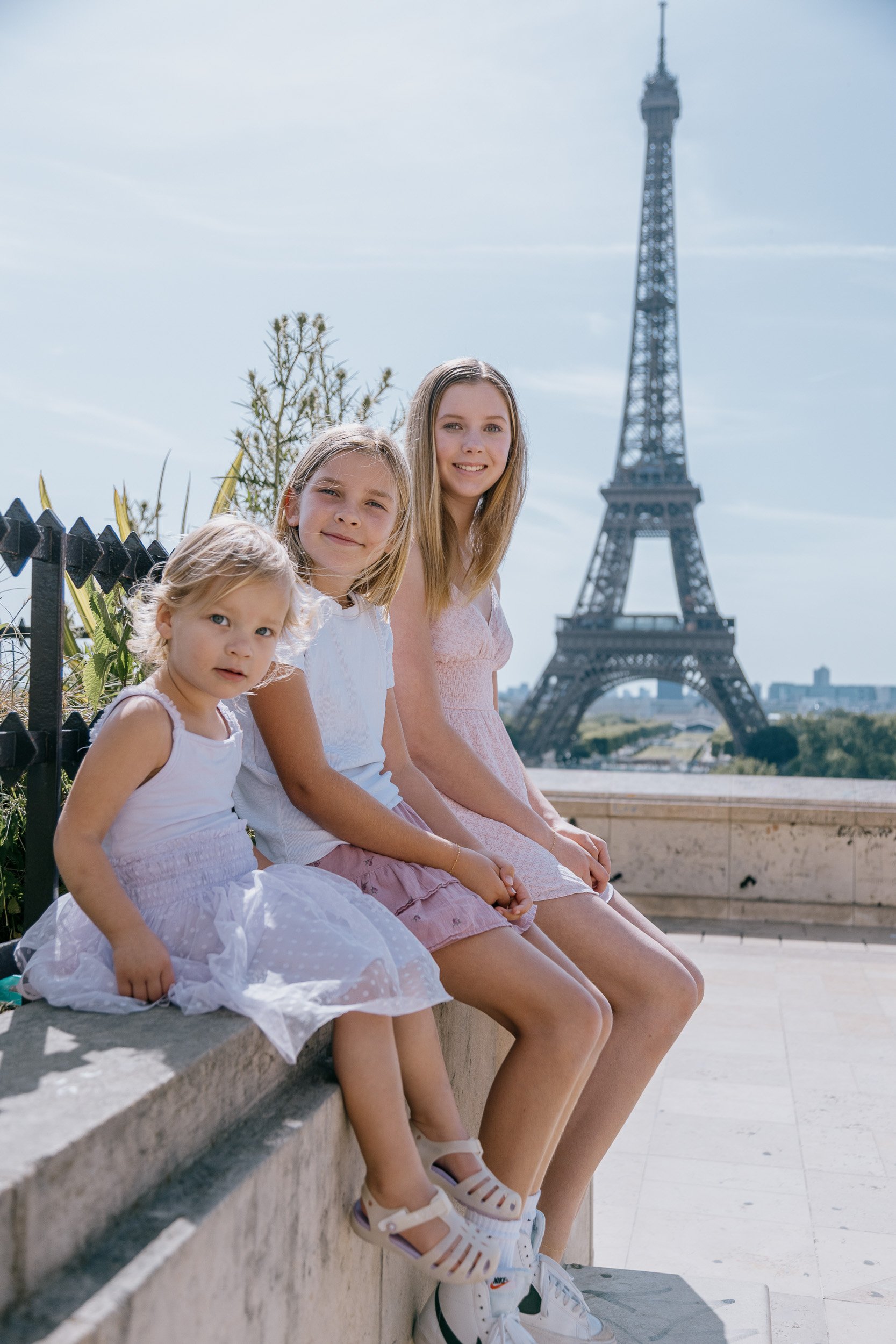
You don't need everyone to wear the same color. In fact, matching outfits can sometimes look too coordinated.
Instead, choose a small color palette and stay within it.
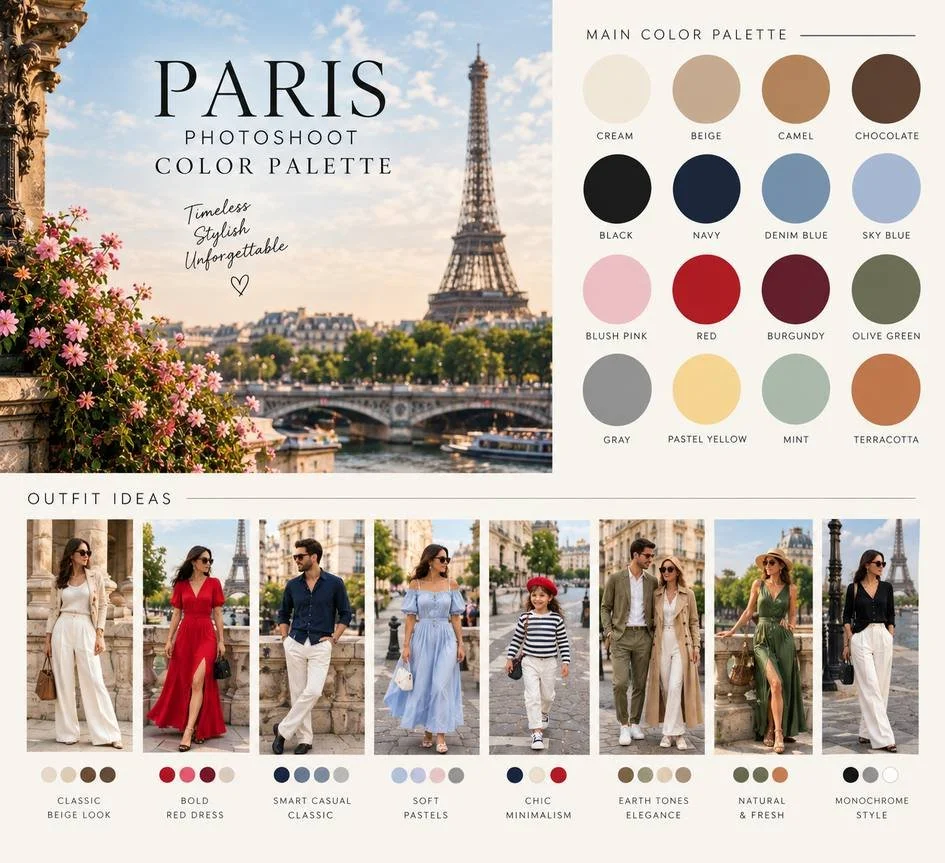
A beautiful Paris palette could be:
Cream
Beige
Camel
Warm white
Soft brown
Taupe
Black
Navy
Soft grey
Muted blue
Olive or sage green
For example:
Mom: cream dress + camel coat
Dad: beige trousers + white shirt + navy jacket
Child: cream sweater + beige trousers
The outfits are different, but they still belong to the same visual world.
That is exactly what we want.
2. Choose a color palette before choosing individual clothes
A simple trick I recommend to my clients is to choose 3–4 main colors before you start getting dressed.
For example:
Option 1 — Soft & elegant
Cream + beige + camel + brown
Option 2 — Classic Parisian
Black + white + camel + denim
Option 3 — Soft autumn
Cream + chocolate brown + beige + muted green
Option 4 — Romantic
Ivory + dusty blue + beige + soft grey
Option 5 — Minimal & timeless
Black + white + grey + camel
You don't have to use exactly these combinations. They are simply examples of palettes that tend to photograph beautifully against Parisian architecture.
The important thing is that the colors complement each other rather than compete with each other.
3. Don't try to match — coordinate
There is a big difference between matching and coordinating.
If everyone wears the same white shirt and blue jeans, the result can look more like a uniform than a natural family photograph.
Instead, repeat colors subtly.
For example:
Mom wears a cream dress.
Dad wears a white shirt and beige trousers.
Daughter wears a beige dress with a cream cardigan.
Son wears a white shirt with brown trousers.
Nobody is dressed identically, but the colors connect everyone.
This creates a much more sophisticated photograph.
4. Avoid very bright colors and distracting prints
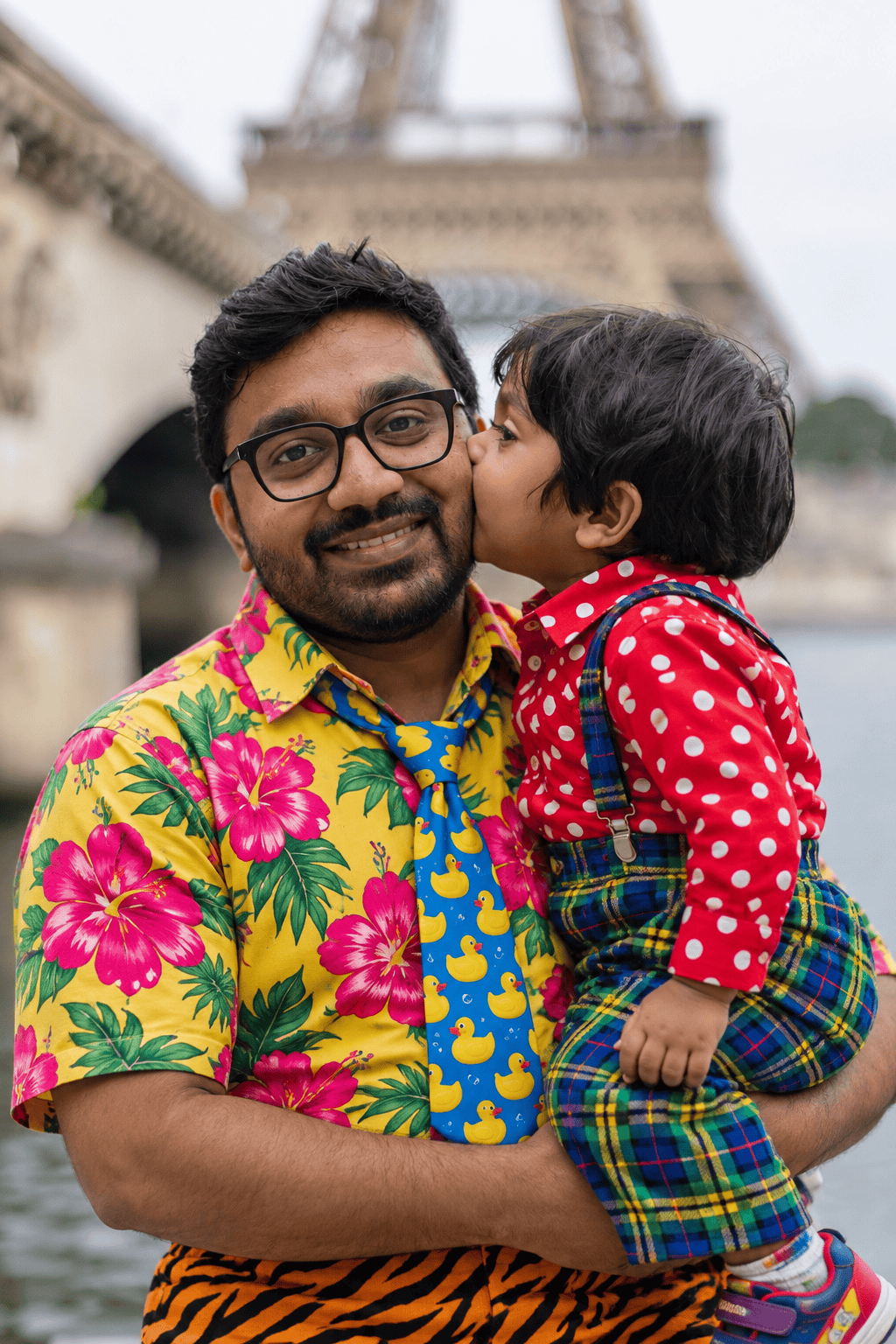
One of the easiest ways to make a group photograph feel less elegant is to introduce one extremely strong visual element.
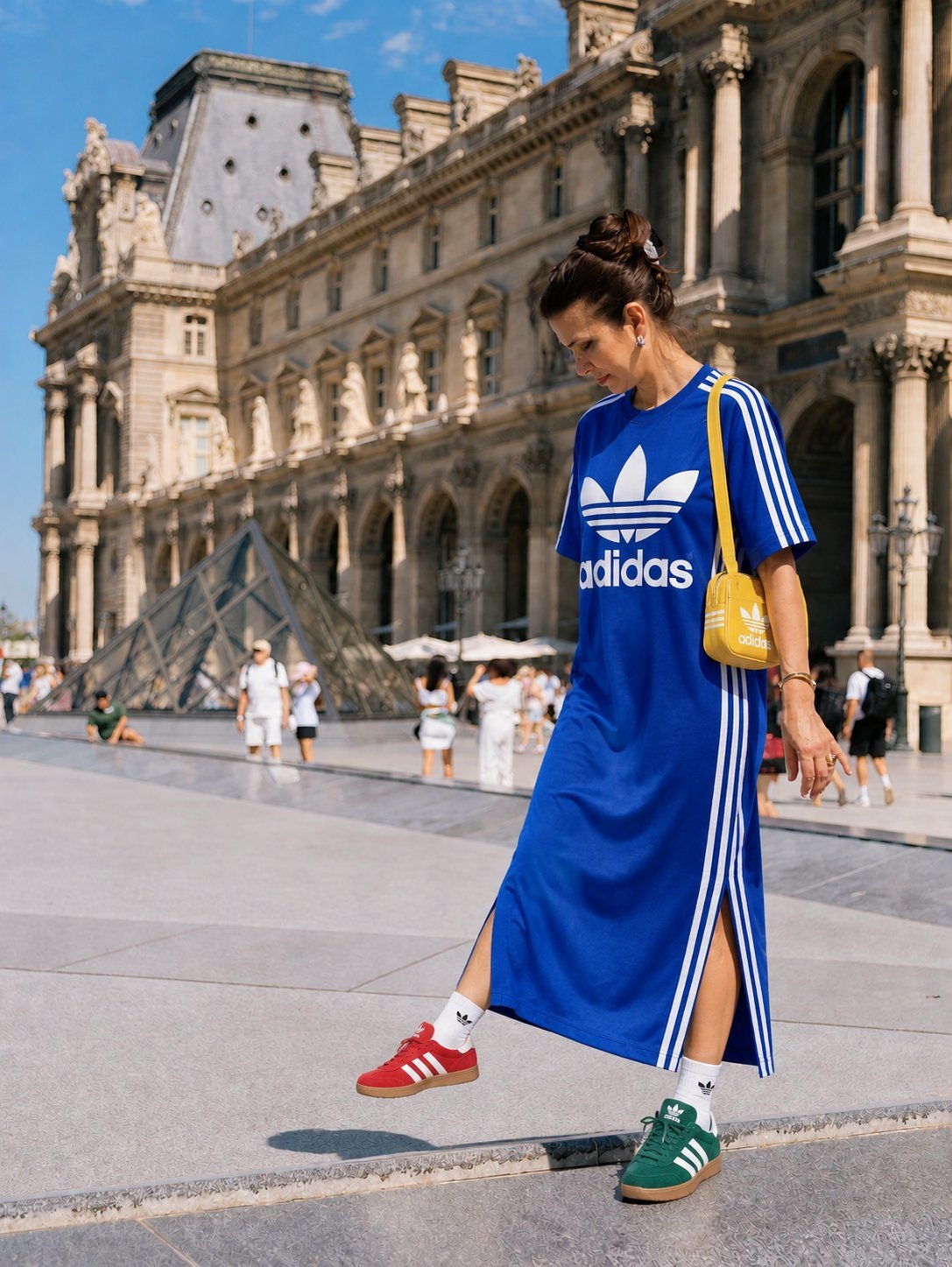
A bright red jacket, neon green sneakers, a large tropical print or a sweater covered in cartoon characters immediately attracts the eye.
And in a photograph, the eye will usually go to the brightest, strongest or most contrasting element first.
That might not be where you want the viewer to look.
This doesn't mean you can never wear color.
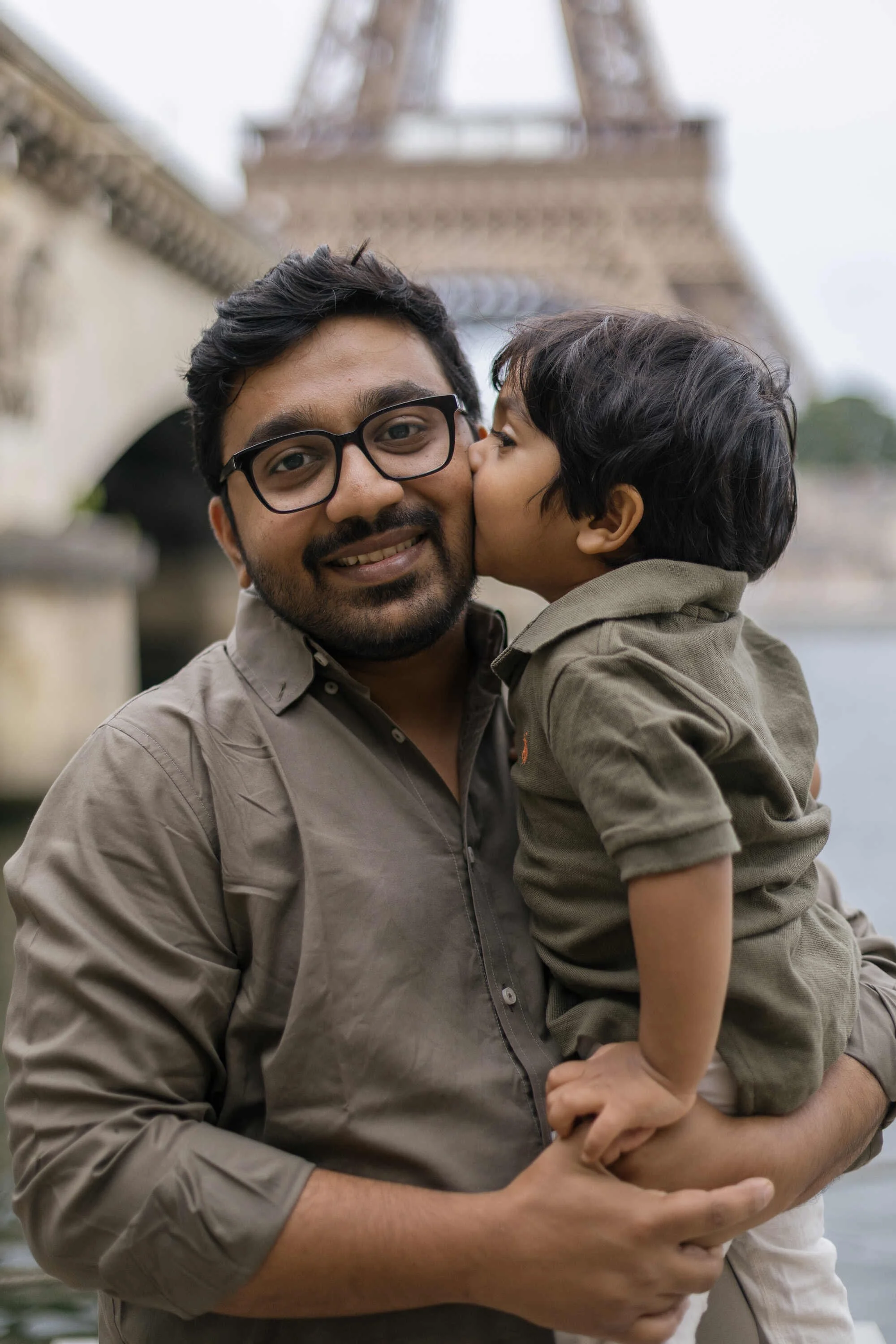
Muted burgundy, dusty blue, forest green, chocolate brown or terracotta can be beautiful.
The difference is between intentional color and a color that completely dominates the photograph.
Instead of:
Bright red floral dress + neon sneakers + patterned jacket
Try:
Burgundy dress + beige coat + neutral shoes
The second combination still has personality, but it allows the people — and the Parisian setting — to remain the focus.
5. Be careful with large prints
Small, subtle patterns can work beautifully.
Large, high-contrast prints are much more difficult.
For a family photoshoot, I generally recommend avoiding:
Large logos
Huge lettering
Very busy floral prints
Neon patterns
Strong geometric patterns
Cartoon characters
Very contrasting stripes
Clothing with lots of different colors
If one person really wants to wear a print, let that outfit become the starting point for the entire color palette.
For example, if your daughter has a small floral dress in cream, dusty blue and beige, the rest of the family can choose clothes in those same tones.
The print becomes part of the composition instead of fighting against it.
6. Think about coats and outerwear
This is especially important for Paris photoshoots in autumn and winter.
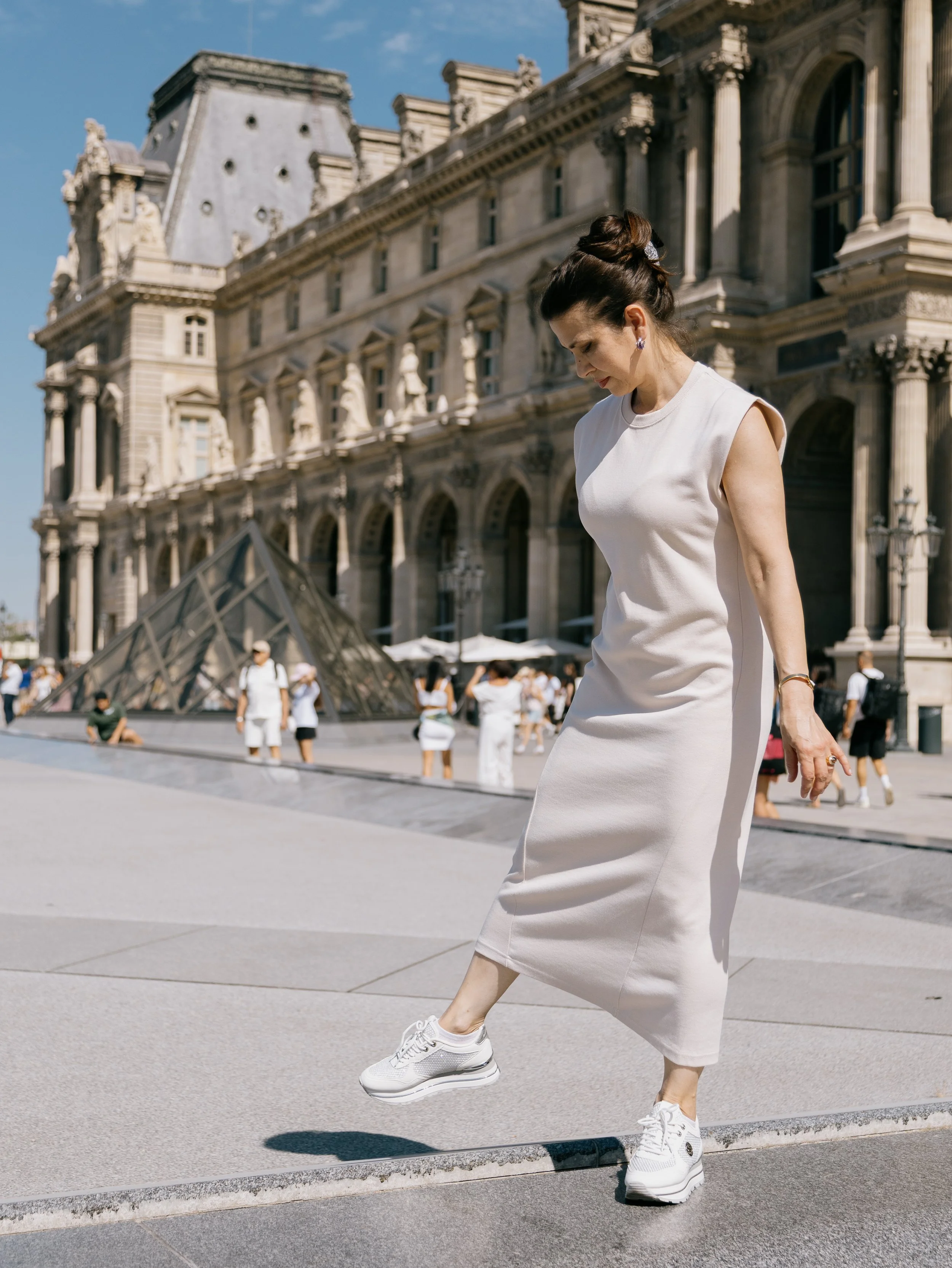
A huge puffer jacket may be warm and practical, but it usually doesn't create the same elegant silhouette as a beautiful wool coat.
If the weather allows, consider:
A long wool coat
A trench coat
A tailored jacket
A classic blazer
A long cardigan
A simple elegant jacket
Neutral colors are particularly versatile:
camel, beige, cream, black, navy, grey and chocolate brown.
Of course, staying warm is more important than looking perfect. If it is genuinely cold, bring the warmest option you need.
But if you have a choice between a very bulky sports-style jacket and a beautiful coat, the coat will usually photograph much better.
And remember: Paris itself becomes part of the photograph.
A simple elegant coat can work beautifully with Haussmann buildings, cafés, bridges and the Eiffel Tower.
7. Shoes matter more than you think
Shoes are often forgotten when planning a photoshoot.
But they are visible in many photographs — especially when we're walking, sitting, crossing a street or photographing full-body portraits.
Try to make your shoes fit the overall style of your outfit.
For example, if you are wearing an elegant dress, tailored trousers or a beautiful classic coat, very sporty running shoes can create a visual disconnect.
A cleaner alternative could be:
Ballet flats
Loafers
Ankle boots
Simple leather sneakers
Classic boots
Elegant sandals in warm weather
This doesn't mean you can never wear sneakers.
Clean, simple sneakers can look great with a casual Parisian outfit.
The key is style consistency.
A fashion-forward outfit + simple clean sneakers can look intentional.
An elegant evening-style outfit + bulky running shoes can look accidental.
And because Paris involves a lot of walking, bring shoes that you can actually walk in. Comfort matters.
8. Comfort is part of a good photograph
This is especially important for families with children.
Please don't choose an outfit simply because it looks beautiful online.
You need to be able to:
Walk comfortably
Sit down
Move naturally
Pick up your child
Hug
Run with your children
Walk through Paris without constantly adjusting your clothes
If you're uncomfortable, it will show in the photographs.
The best photographs often happen while we're walking, talking, laughing or interacting — not while everyone is standing perfectly still.
So choose something that makes you feel comfortable and confident.
9. What to wear for a couple's photoshoot
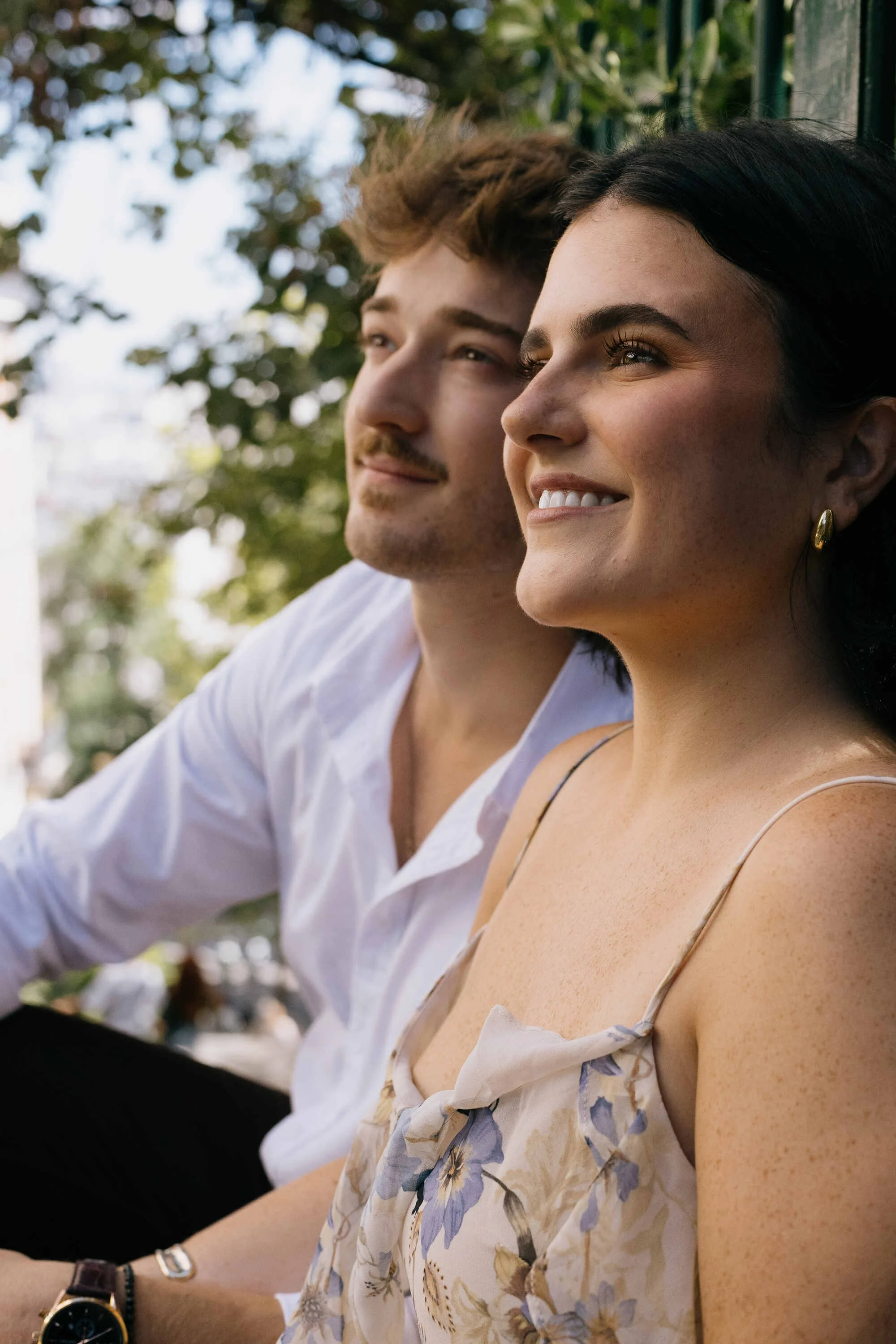
For couples, I usually recommend creating a feeling rather than matching outfits.
Think about the style you want your photographs to have.
For an elegant Parisian look:
Her: long dress + coat + boots
Him: trousers + shirt + wool coat
For a relaxed Parisian look:
Her: jeans + knit sweater + trench coat
Him: trousers + shirt + jacket
For a romantic look:
Her: flowing dress + simple shoes
Him: neutral trousers + shirt + blazer
The important thing is that both outfits belong to the same visual story.
You don't need to wear exactly the same colors.
Instead, look for colors and textures that complement each other.
10. What to wear for a family photoshoot
For families, I recommend choosing one person's outfit first, then building the rest of the palette around it.
For example, perhaps your daughter has a beautiful cream and dusty-blue dress.
Now you can use those colors throughout the family:
Mom: cream + beige
Dad: navy + beige
Daughter: cream + dusty blue
Son: beige + white
The family doesn't look identical, but everything feels connected.
One more important tip:
Don't put everyone in exactly the same shade.
If four people are all wearing exactly the same beige, the photograph can become flat.
Mix different shades and textures instead:
cream + ivory + beige + camel + soft brown.
This gives the image depth.
11. Use layers and textures to add depth
When your colors are simple and coordinated, layers and textures can make an outfit much more interesting in photographs.
You don't need lots of colors or complicated patterns. Instead, try combining a few simple pieces with different textures and shapes.
For example:
A simple T-shirt with a shirt worn open over it
A sweater casually tied around the shoulders
A knit sweater over a shirt with the collar showing
A blazer over a T-shirt
A cardigan over a simple dress
A trench coat over a sweater and shirt
Layering adds depth, texture and movement to photographs. It also gives you more options during the shoot — you can take a layer off, put it back on, or change the way you wear it without changing your entire outfit.
For example, a simple white T-shirt and beige trousers can become much more interesting with a light blue shirt worn open over it or a neutral sweater casually draped over the shoulders.
Textures are just as important. Think about:
Wool
Linen
Cotton
Cashmere
Denim
Silk
Knits
Suede
Leather
A cream knit sweater, a wool camel coat and a silk dress may all be neutral, but they won't look boring together. Different textures create visual depth while keeping the overall look elegant and cohesive.
This is especially beautiful in autumn and winter Paris photographs, when coats, scarves and knitwear naturally create more layers.
Just remember: layering doesn't mean wearing lots of clothes. A few light, well-chosen pieces usually look much more effortless than several heavy layers.
And keep your color palette in mind. The layers and textures should complement each other rather than introduce completely new colors.
12. Don't forget accessories
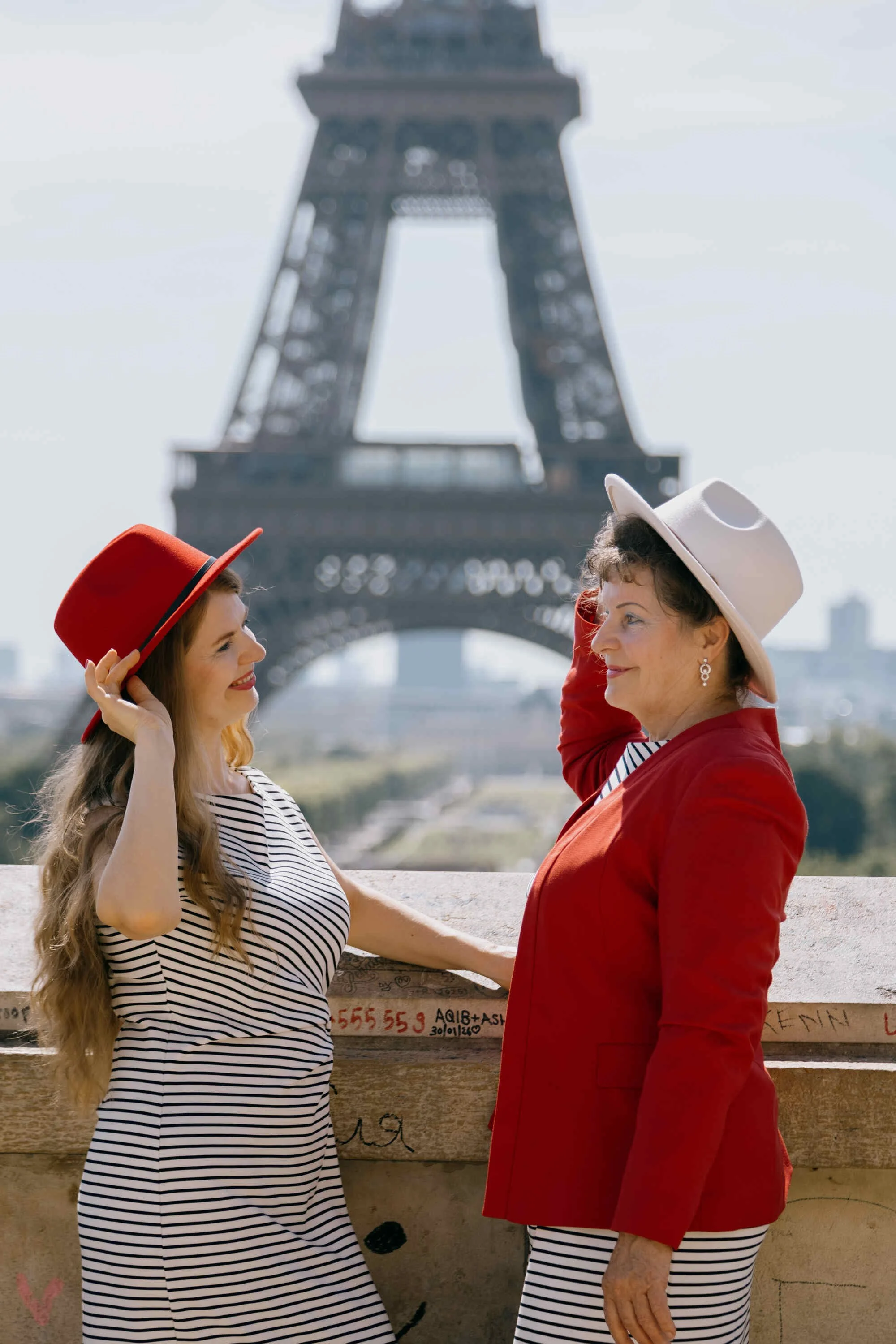
Accessories can add personality without overwhelming the photograph.
A simple:
Scarf
Beret
Hat
Small handbag
Watch
Simple jewellery
Sunglasses
can complete the look.
Again, less is often more.
You want your accessories to support the outfit, not become the main subject.
13. What NOT to wear for a Paris photoshoot
Here is my quick checklist.
Try to avoid:
❌ Very large logos
❌ Neon colors
❌ Extremely busy prints
❌ Everyone wearing completely different colors
❌ Everyone wearing exactly the same outfit
❌ Bulky sportswear unless it is part of your style
❌ Very bright running shoes with an elegant outfit
❌ Clothes that need constant adjustment
❌ Uncomfortable shoes
❌ Anything you don't normally feel like yourself in
And most importantly:
Don't wear something just because you think it looks good in photographs if you don't feel good wearing it.
Confidence is always more beautiful than a perfect outfit.
14. The easiest formula: start with three colors
If you're still unsure, try this simple formula:
1 main color + 1 neutral + 1 supporting color.
For example:
Beige + cream + brown
or
Navy + white + camel
or
Black + cream + grey
or
Dusty blue + beige + white
Then choose different shades and textures within that palette.
This works particularly well for couples and families because everyone can choose clothes individually while still looking connected.
15. Before your photoshoot: lay everyone's clothes together
This is my favorite practical tip.
Before your trip, put everyone's outfits on the bed together.
Don't look at each outfit separately.
Look at the whole picture.
Ask yourself:
Do the colors work together?
Is one item much brighter than everything else?
Is one pattern too dominant?
Are the shoes consistent with the style?
Does anyone look too casual compared with the others?
Are there too many different colors?
Does the overall look feel like Paris?
If something immediately catches your eye, it will probably catch the camera's eye too.
Change that one piece before the photoshoot.
16. What I recommend for a Paris photoshoot
Paris already gives us an incredible visual background: beautiful architecture, neutral stone, elegant streets, gardens, bridges and the Seine.
You don't need your clothes to compete with it.
I love outfits that feel simple, timeless and elegant, with beautiful textures and a soft, coordinated color palette.
Think:
effortless rather than over-styled.
Your photographs should still look beautiful five or ten years from now.
And most importantly, you should still look like yourself.
Final tip from your Paris photographer
If you're still unsure about what to wear, send me photos of the outfits you're considering.
You can also send me a few reference images that you love.
I can look at the colors, style and overall combination and help you choose what will work best for your photoshoot and location in Paris.
The goal isn't to create a perfect fashion editorial.
It's to create photographs where you, the people you love, and Paris all work beautifully together.
Ready for your Paris photoshoot?
I photograph couples, families and solo travellers throughout Paris, with a natural and relaxed approach.
We'll choose the location and timing based on your style, and I'll guide you during the session so you never have to worry about what to do in front of the camera.
Paris is the backdrop. Your connection is the story.
